The Sentence That Sets the Fee: UK Creatives on AI Clauses and the Art of Pushing Back
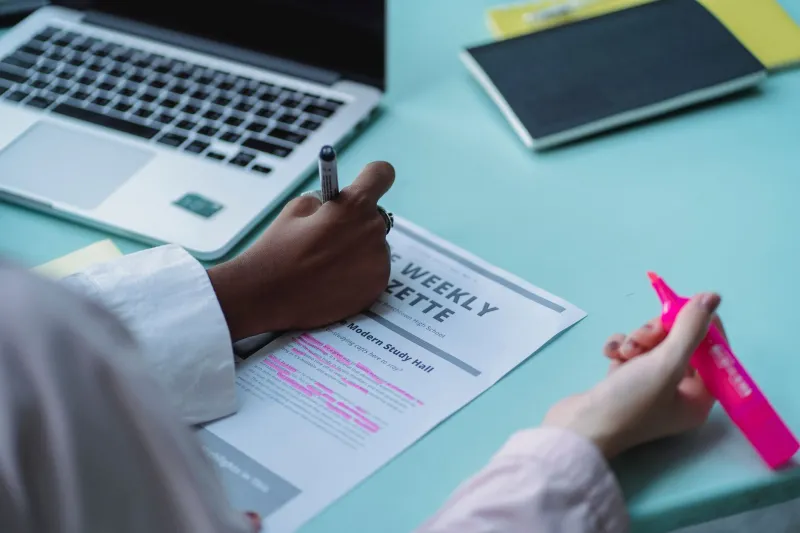
The first thing one Bristol-based illustrator does with a new commission is not read the brief. It is not check the fee. It is open the PDF and search for the word train. 'It takes about twelve seconds,' she says. 'If it's a yes, I reply before I quote. It saves us both a week of emails.'
That search term is the spine of a quiet shift in UK creative practice in 2026. The AI conversation has moved out of conference panels and into the middle of contracts, usually in a paragraph that begins with something like: the Supplier grants the Client a perpetual, irrevocable, worldwide licence to use the Deliverables for any purpose, including the training of machine learning models. For plenty of illustrators, designers and makers, that is the clause they read first. Not the payment terms. Not the kill fee. The AI line.
On this portfolio, the images tend to get the attention. The paperwork does not. But in 2026, the paperwork is part of the practice. The clause shapes the fee, the credit, the brief and sometimes the work itself.
The Ctrl+F Clause
The words creatives scan for are specific: train, training, machine learning, generative, derivative works, sublicense, waive moral rights. One Leeds-based graphic designer has a saved search in her PDF reader for AI and its cousins. 'It's not paranoia,' she says. 'Nine times out of ten the client has copied a template and has no idea what it means. The tenth time, they do.'
That distinction matters. The generic panic version of this story says every client is trying to feed your work into a model. The studio version is more mundane. Most clients want a poster, a campaign, a set of illustrations. They have inherited a clause from a larger organisation or a legal template that was written for a different kind of supplier. The awkward email is not always a fight. Sometimes it is a translation exercise.
What They Ask For
The edits UK creatives are asking for are surprisingly narrow. Remove the words for AI training. Replace any purpose with the purpose of this commission. Add a line saying the work will not be included in a dataset, used for fine-tuning, or sublicensed to a model developer. If AI use is genuinely part of the project, price it separately and name it in the brief.
One Manchester maker puts it plainly: 'If you want my work to teach your tool, that's a different job. It's not a hidden extra in a £900 commission.' She now quotes a separate licence fee for model training. Sometimes the client says no and the clause disappears. Sometimes they say yes and the fee goes up. Either way, the conversation is explicit.
Small wins count. A London illustrator recently got a perpetual licence reduced to eighteen months for a campaign. A Cardiff designer asked for a credit line and the right to show the work in her portfolio; the client agreed in one email. Another illustrator added a sentence saying no AI-generated outputs could be attributed to her. 'It's not a huge legal victory,' she says. 'But it stops my name being attached to something I didn't make.'
The Fee Conversation
The money question is where the clause stops being abstract. If a client wants broad AI rights, creatives are increasingly treating that as a separate usage. Not a moral lecture. A line item. One photographer describes it as a training levy: 'I don't call it that in the email. I just say the licence needs to reflect the use.'
The results are mixed, as they always are. Some clients accept a higher fee. Some remove the clause. Some disappear. The creatives I spoke to were less interested in winning every argument than in not signing away something they had not priced. 'I can live with a no,' one says. 'I can't live with finding out two years later that my work trained a tool I would never have agreed to.'
There is also the quieter consequence: the brief changes. When AI use is named, clients have to say what they actually want. Is the work for a human campaign? Is it for a model? Is it for a pitch that may never run? Naming the use makes the job more specific, and specificity usually makes the work better.
The Email That Works
The most useful thing in this whole debate may be a short email. One illustrator shared the version she now sends: 'Thanks for this. Before I sign, can we adjust clause 4.2? I'm happy for you to use the work across the campaign and paid media for twelve months. I can't grant rights for AI training or sublicensing to model developers. If that's needed, I'll quote separately. Everything else looks good.'
It is polite, specific and hard to argue with. It also does something the panic does not: it gives the client a way to say yes. The reply is often not a legal battle. It is an amended PDF and an apology for the template.
What It Does to the Work
None of this is only about contracts. The clause changes what gets made. A freelance illustrator in Glasgow now keeps layered files and process notes as part of her delivery, not because she expects theft, but because she wants the human decision-making visible. A designer in Birmingham has started adding a short 'how this was made' note to proposals. 'It sounds soft,' she says. 'But it makes the conversation about authorship concrete before anyone sends a contract.'
The portfolio is still the shop window. The contract is the door. In 2026, UK creatives are learning to check both before they let anyone in. The work on this site is made by a person. The paperwork should say so.