The Postcode Brief: UK Creatives on Making Work for the Street They Live On
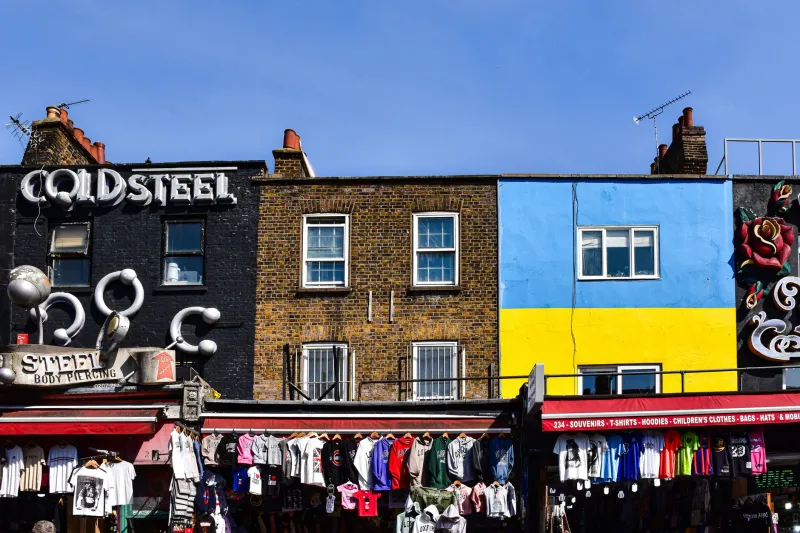
At Isabel KM, a portfolio is usually a passport: it shows what you can do and hints at where you might go next. But some of the most useful work in a creative life never leaves the neighbourhood. It is the poster for the library's repair café, the window display for the independent bookshop, the mural on the side of the community centre. These are briefs with a postcode, a committee, and a budget that has been argued over in a church hall.
Local commissions are not smaller versions of commercial briefs. They ask different questions. Who will see this every day? What does it need to survive? Who has to say yes? And what does it mean to make something that belongs to a place rather than a campaign? For UK creatives in 2026, as high streets continue to reshape and community spaces fight for funding, these projects are both a practical income stream and a way to test work in public.
The audience who knows your name
When you design for a national brand, the audience is a segment. When you design for the high street, the audience is the person who runs the greengrocer's and the teenager who waits for the bus outside. They will tell you what they think. That feedback loop is fast, unfiltered and sometimes awkward. It is also a gift.
One illustrator in Sheffield describes making a series of posters for a local library's winter programme. The brief was simple: fill the windows, don't make it feel like a council leaflet, and remember that the audience includes children, pensioners and people who come in for the warm space. The first draft was too clever. The second was too safe. The third worked because it was legible from the pavement and had a joke that only regulars would get. That is local design in a sentence: specific, useful and quietly generous.
Constraint as a creative material
Local briefs come with constraints that would make a brand manager wince. Budgets are small. Committees are large. Approval can involve three volunteers and a vicar. The work has to withstand rain, sun, seagulls and the occasional sticker. None of this is a reason to lower your standards. It is a reason to change what you are solving for.
A designer in Cardiff talks about a shopfront scheme where the colour palette had to work with the existing Victorian brick, the owner's hand-painted sign and the council's conservation rules. The constraint did not kill the idea. It gave the idea a home. The final design used two colours, a clear typeface and a repeating shape that could be cut from vinyl in a small workshop. It looked good in a photograph. More importantly, it looked good from across the road in the rain.
Practical constraints also clarify your process. Ask about substrate, lifespan, accessibility, installation and who will maintain the work. Ask what happens when the season changes or the shop changes hands. A local project is often a long relationship wearing the clothes of a one-off commission.
Visibility that travels
There is a strange bonus to work made for a specific postcode: it can travel further than expected. A mural in Leeds gets photographed by a passer-by and posted on a design blog in Melbourne. A library poster gets shared by a librarian in Canada. The localness is not a limitation; it is the detail that makes the work interesting. People can feel the specificity even if they have never been to the street.
But the travel should be a by-product, not the point. If you design for the algorithm, you end up with work that looks like everywhere. If you design for the neighbourhood, you end up with work that could only come from somewhere. That is a stronger portfolio position. It gives you a story with context: the brief, the constraint, the committee, the shopkeeper, the weather. At Isabel KM, that is the kind of case study we want to see more of — not just a hero image, but a small record of how the work met its audience.
Practical takeaways for 2026
If you are considering a community-rooted project this year, here are a few things UK creatives have learned the hard way.
- Ask who the work is for before you ask what it should look like. The answer will change the design.
- Price for the unseen hours: meetings, site visits, revisions with a committee, and the extra round of approval you did not plan for.
- Design for the street, not the grid. Test legibility at distance, in grey light, and next to the colours already on the building.
- Build a local case study. Photograph the work in situ, note the constraints, and collect one sentence from the person who commissioned it.
- Keep a clear community rate and a clear scope. Local does not mean free, and goodwill is not a payment plan.
- Say no to briefs that ask you to work for exposure, even if the cause is good. A healthy local ecology needs paid work.
- Let the work be local. Do not force it into a national campaign format before it has had a chance to belong.
The portfolio as a neighbourhood
A portfolio is often built to impress strangers. A local project reminds you that it can also be built to serve neighbours. That shift in audience can make the work more direct, more durable and more distinctive. It can also make you a better collaborator, because you learn to explain your choices to people who are not immersed in design culture.
The projects that stay local rarely make the biggest noise. They make a different kind of sound: the shopkeeper saying thanks, the librarian taping a poster to the window, the kid pointing at the mural. In 2026, that is worth putting in the portfolio. Not because it is small, but because it is specific. And specific work has a way of travelling.