The Cropped Self: UK Creatives on What They Leave Out of the Frame
There is a moment, somewhere between finishing the work and posting it, when a lot of UK creatives open a folder called something like headshots_final_final and feel a small, specific dread. The work is done. The caption is written. All that’s left is the face.
We talk about personal branding as if it were a matter of visibility — put your face on the site, show up on Stories, be a person not a logo. But the more interesting decision, the one that actually shapes how the work is read, is what kind of face you allow and how much of it. The cropped self. The back of the head. The hands, the desk, the half-turn. In 2026, with portfolios built to be browsed quickly and client decks assembled from screenshots, the portrait is doing more work than ever — and some creatives are quietly taking it back.
The back of the head and other honest pictures
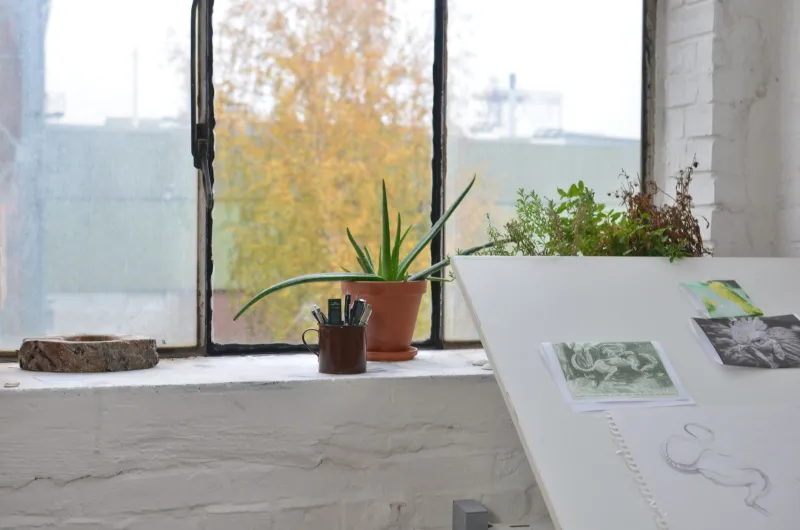
Nadia Okafor, an illustrator in Leeds, has not shown her full face on her website since 2023. Her about page is a photograph of the back of her head, hair pinned up, a window in front of her. You can see the edge of a drawing board. You cannot see her eyes.
“I got tired of the expression doing the talking,” she says. “Every headshot is a performance of approachability. I’d get emails saying ‘you seem so warm’ and I’d think, you’ve met a JPEG.” The back-of-head image, she says, works as a kind of handshake without a face — it says someone is here, working, and leaves the rest to the portfolio.
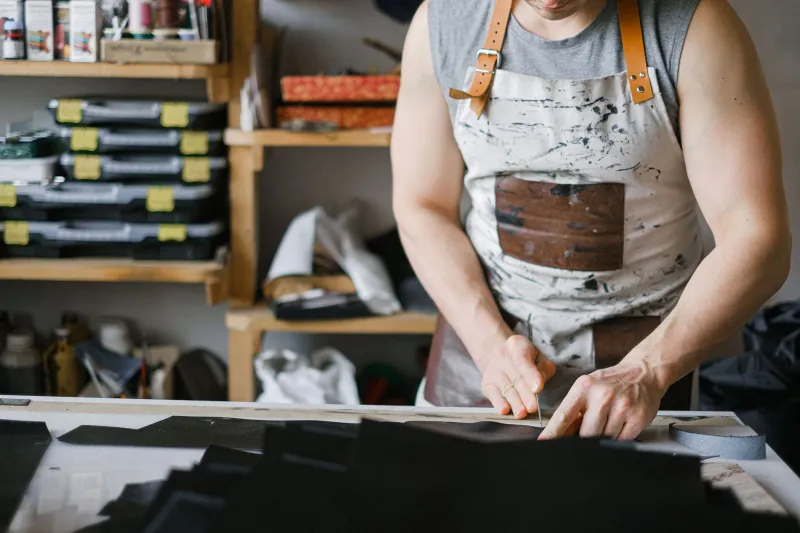
She is not alone. Scroll through the sites of illustrators, ceramicists and independent designers and you’ll find a genre of portrait that has quietly matured: the over-the-shoulder shot, the hands in clay, the figure at a distance in a studio. These are not shy images. They are edited images, chosen because the face was starting to compete with the work.
When the face is the brief
Tom Beresford, a brand designer in Bristol, went the other way. His site opens with a clean, well-lit portrait — direct gaze, plain shirt, a corner of a studio behind him. He uses the same image in client decks.
“For what I do, the face is part of the service,” he says. “Clients are buying a relationship with a person who will sit in a room and make decisions with them. If I hide, it reads as either arrogance or chaos.” He tried a more abstract approach for six months — a monogram, a studio shot with no people — and found that new enquiries got slower and more tentative. “People were booking a brand, not a designer. That wasn’t the business I wanted.”
His rule is not about how much face, but about consistency. The person in the deck, the person on the call and the person on the site should be recognisably the same. “It’s not about looking good. It’s about reducing the low-level anxiety a client feels when they can’t picture who they’re hiring.”
The cost of a smile
Priya Shah, a ceramicist in Margate, has a cautionary tale about a very good photograph. In 2024 she commissioned a set of portraits — bright, friendly, shot on the beach near her studio — and put one on her homepage. Enquiries went up. But so did a particular kind of enquiry: people wanting a cheerful, affordable, gift-shop version of her work.
“The photo was doing a lot of the talking, and it was saying ‘nice lady, nice pots’,” she says. “My work had got stranger and more sculptural, and the picture was pulling it back toward something softer.” She replaced it with a photograph of her hands wedging clay, cropped at the wrist, and the nature of the enquiries shifted within a few months. “It’s not that the smiling photo was false. It was just answering a question I hadn’t asked.”
What the portrait promises
Ewan MacLeod, a photographer and creative director in Glasgow who has shot portraits for dozens of makers, thinks the trouble starts when people treat the image as decoration rather than as a claim.
“Every portrait makes a promise,” he says. “A direct gaze with a plain background says: I am the product, talk to me. A figure in a messy studio says: the process is the product. A cropped hand says: the object is the product. None of them are wrong. But you have to know which promise you can keep for the next two years.”
He suggests a simple test for anyone rebuilding a creative identity in 2026: show the shortlisted portraits to three people who don’t know your work and ask them what they think you do, and who they think you are for. “If the answers are wildly off, the image is working too hard.”
Three checks before you crop
If you’re redoing the about page this winter, these are the questions worth sitting with before you upload anything.
- What is the portrait doing that the work can’t? If the answer is “making me look friendly”, ask whether that’s a job for the copy, the captions, or a real conversation.
- Which version of you is in the client deck? Consistency between site, proposal and social profile matters more than the quality of any single image. A slightly awkward but consistent portrait beats a beautiful one that only appears once.
- Can you live with the promise for two years? A portrait is a small contract with the viewer. Choose one you won’t need to quietly remove in March.
The part that stays
The creatives who seem most at ease with this aren’t the ones who show everything or the ones who show nothing. They’re the ones who can say, clearly, what the image is for. Nadia’s back-of-head is not modesty; it’s a way of keeping the gaze on the drawing. Tom’s direct gaze is not vanity; it’s a form of client care. Priya’s hands are not a retreat; they’re a correction.
The portrait problem doesn’t really have a solution. It has a practice: deciding, again and again, which part of yourself belongs in the frame — and trusting that the rest of you is still in the work.