The Bench Behind the Bench: What a Studio Reel Refuses to Show
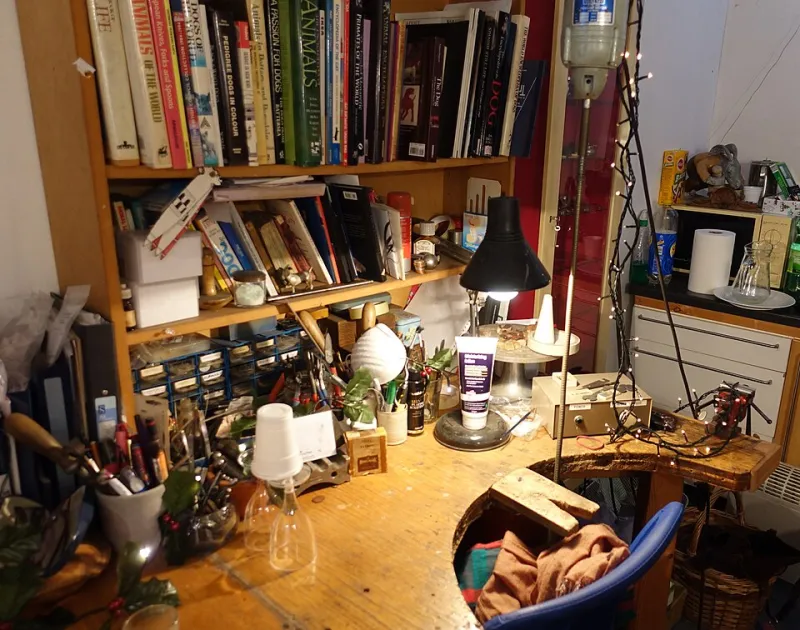
Photo: Tim Frost from Braintree, England, CC BY-SA 2.0, via Wikimedia Commons
A ceramicist in Stoke filmed her studio tour four times last month. Not because the light was wrong, or the sound was bad, or the kiln was making that noise again. Because there was a bucket in shot. A grey plastic bucket, half full, entirely ordinary, sitting exactly where it always sits.
The fourth take worked. The bucket went out of frame. And that, more or less, is the whole story of the short-form studio video: a series of small, mostly unspoken decisions about what a working space is allowed to look like when someone else is watching.
The frame is an edit
We talk about vertical video as though it’s candid. It isn’t. A sixty-second tour is a floor plan with a voiceover. Which corner you start in, which tool you pick up first, whether the window is behind you or in front, whether the dog appears — all of that is decided in about ninety seconds of thinking, and it reads on screen as effortless.
Makers know this. What’s more interesting is what they do with the knowledge, because the same instincts that make a good reel also make a slightly dishonest one, and most people are trying to find the line between the two.
What gets swept off the bench
The list is remarkably consistent across disciplines. The drying rack with eleven failed glaze tests. The shelf of misfires. The invoices. The second-hand kiln that trips the fuse if you run the extractor at the same time. The pile of packaging waiting for a collection. The dog hair, which is everywhere, always, and which no amount of lint rolling will defeat.
“It’s not shame, exactly,” says a jeweller in Sheffield. “It’s that if people see the failures they ask if you’re okay. And then you have to explain that failure is the job, which takes longer than making the thing did.”
There’s a practical logic to the sweep, too. A tidy bench reads faster. The eye finds the action. In sixty seconds you have room for one idea, and the idea is usually this is what I do, not this is what it costs me.
Expectations, set in sixty seconds
Here is where the edit stops being aesthetic and starts being commercial. A client who has watched forty studio reels arrives at your inbox with a mental model of your process, and that model is fast. Six weeks of drying, firing, glazing and re-firing can look, in a well-cut clip, like an afternoon with a soundtrack.
Some makers have started building the timescale back in deliberately. A shot of a piece sitting on a shelf with a caption reading “day 34” does more for expectation management than any FAQ page. Others make a point of filming the same object twice, months apart, and letting the second clip open with the first one still unfinished.
And then there are the makers who simply don’t post a tour at all, on the grounds that the version of their practice a reel can hold is not the version they want to be hired for. That’s a legitimate position, and it’s quietly growing.
The shelf that isn’t finished
The unfinished shelf is the loss in all this. A tidy reel shows competence; it hides the iterative thinking that clients are actually paying for — the second draft, the rejected glaze, the maquette with the obviously wrong proportions that taught you what the right ones were.
A textile designer in Bristol puts it plainly: “The mess is the method. If I only show the clean bit, people think the clean bit is where the value is, and then they wonder why the quote is what it is.”
Some makers are now showing the middle on purpose. A weaver films the warp she cut off. A printmaker posts the registration sheet with the ghost of a mistake on it. It performs surprisingly well, because everyone who has ever made anything recognises it.
Making peace with the gap
If you’re going to film your studio — and plenty of people shouldn’t — a few things seem worth holding on to.
Film the bench at five in the afternoon rather than nine in the morning. Keep one honest frame in the cut, even if the rest is composed. Caption the timescale somewhere, anywhere. And don’t build a tidy studio you don’t actually have just to satisfy a format that will be replaced in eighteen months.
Because the bucket never ruined the video. The fourth take did.