The One-Weekend Show: Why UK Creatives Are Opening Their Front Doors This Winter
There is a particular kind of November light in a UK terraced house. It comes through a front window at about three in the afternoon, catches the edge of a picture frame, and then disappears. For a small but growing number of illustrators, designers and makers, that light is the whole point. This winter, they are turning spare rooms, hallways and kitchen walls into one-weekend exhibitions — part studio visit, part gallery debut, part low-key social experiment.
The home show is not new. People have been selling paintings off their living room walls for as long as there have been living room walls. But something about the current moment feels different. Formal gallery slots are scarce, studio visits can feel too raw, and the usual online launch — a post, a link, a quiet closing of tabs — rarely gives work a room to breathe. A weekend at home sits somewhere in between. It is public enough to count, private enough to stay honest.
The bit the gallery cannot do
A white cube asks you to look at the work and nothing else. A home asks you to look at the work beside the radiator, the bookcase, the cat that has decided the private view is for it. That context does something to the pieces. Smaller work holds its own. A series that looked tidy on a screen starts to feel like a conversation. Visitors linger because there is nowhere to be and no invigilator hovering by the door.
“You see people relax,” says one Bristol-based illustrator who opened her spare room for a weekend in early November 2026. “In a gallery they stand two feet back. Here they sit on the arm of the sofa and ask how long a drawing took. It is not less serious. It is just less performed.”
The intimacy also changes what gets shown. Work that felt too strange for a polished debut — sketchbook pages, tests, a small run of prints made on a kitchen table — can find an audience. The home show makes room for the almost-finished, the side project, the thing that only makes sense when it is six feet away from a person holding a mug.
The invitation is the hang
If the work is half the show, the invitation is the other half. Creatives who do this well tend to treat the guest list as part of the composition. Some send a short note to their mailing list and keep the address off public social media. Others print a hundred cards and post them through neighbours’ doors, which is either charming or terrifying depending on your relationship with the street.
The most common shape is a Saturday and Sunday, with a private view on the Friday evening. Timed slots help. So does an RSVP, not because anyone wants to be a bouncer, but because a spare room can hold twelve people comfortably and thirty badly. One ceramicist in Sheffield asks guests to book a half-hour window and leaves the rest of the house closed. “People are respectful if you tell them what the rules are,” she says. “The problem is when you don’t tell them and then get resentful.”
That means clear boundaries: which rooms are open, where coats go, whether the bathroom is available, and when the show actually ends. A small sign on the stairs is not unfriendly. It is the domestic equivalent of a gallery attendant. If children or pets are part of the household, say so on the invitation. If step-free access is limited, say that too. The intimacy only works if guests know what they are walking into.
Pricing without the plinth
Money is where home shows can get tangled. Without a gallery taking a cut, the artist keeps more — but without a gallery, there is no one else to set the frame. Prices can drift low out of awkwardness. A useful rule: decide the price before the first guest arrives, write it down, and put it on a small label beside the work. A printed list by the door saves everyone from the “how much is this one?” shuffle.
Card readers and payment links make buying easy, but cash still works. Some makers offer a deposit scheme for larger pieces and a flat rate for prints. Others keep a handful of cheaper items — postcards, small editions, seconds — near the exit, because not everyone can buy a painting but plenty of people will leave with something. The point is not to turn the hallway into a shop. It is to remove the friction that stops a interested visitor becoming a buyer.
Selling from home also means being clear about what happens after the weekend. When will work be collected? Who pays for delivery? Is there insurance? If a piece is damaged, what then? Boring questions, but they keep the warmth from turning sour.
What the house rules teach the portfolio
A home exhibition is a useful stress test for a creative portfolio because it makes the same demands in miniature. You have to sequence work for a real space. You have to write a caption that explains without over-explaining. You have to invite people without begging them. You have to document the show without turning it into content first and an exhibition second.
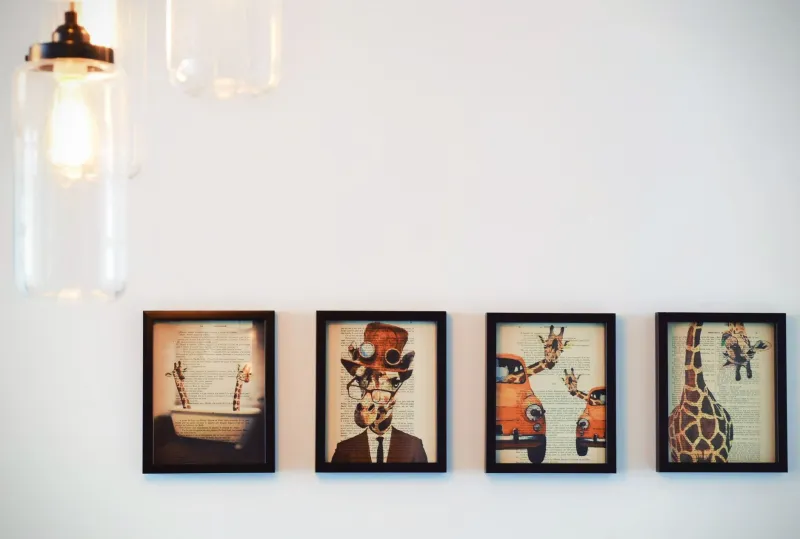
That last part matters. The photographs from a home show often do more long-term work than the weekend itself. A wide shot of a kitchen wall with three framed pieces and a bunch of tulips can say more about your practice than a hundred polished mock-ups. It shows the work in the wild, at human scale, next to a kettle. For anyone building a portfolio in public, that is not a compromise. It is evidence.
At Isabel KM, we keep coming back to the same idea: the best creative identities are the ones that let people see the seams. A home show does exactly that. It is not a substitute for a formal gallery debut, and it is not a studio visit with better snacks. It is a third thing — a small, temporary, generous room where the work has to stand up in daylight and conversation. This winter, with the afternoons getting dark by four, that might be exactly the kind of room UK creatives need.