The Uninstall: UK Creatives on the Week After a Group Show
The private view is over by nine. By half past, the warm white wine is back in its box and someone is folding a trestle table with the grim efficiency of a person who has done this before. The group show comes down in under an hour. What follows is a week that almost never makes it into the captions.
We asked illustrators, designers and makers across the UK what happens after the invites are swept up. The answer, almost universally, was: not very much, and quite a lot, at the same time. The room empties. The group chat goes quiet. The post gets a respectable number of likes, a handful of saves, and one comment from an aunt asking whether the work sold.
Nine O'Clock, and Then the Van
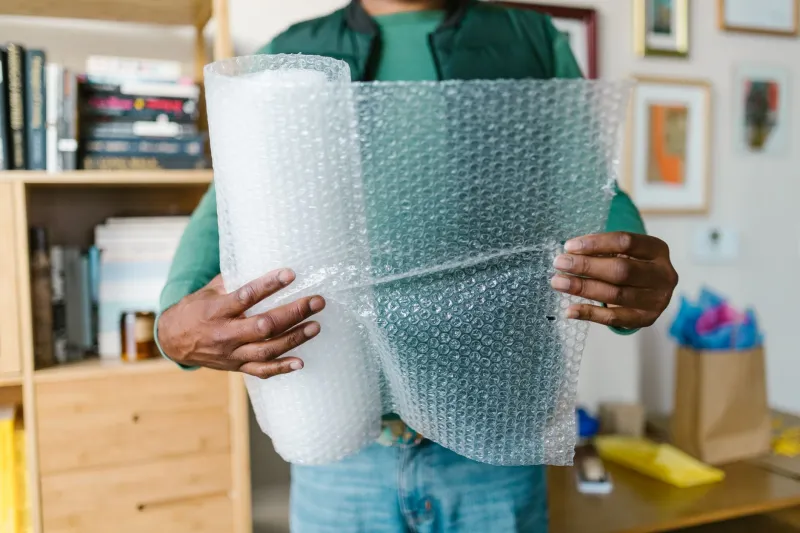
There's a specific anticlimax to the group show. A solo show at least has the decency to feel like a milestone. A group show is a shared room, a shared risk, and a shared trestle table. You spend six weeks thinking about the hang, the lighting, the label text, whether the piece on the end wall is too close to the radiator. Then it's done, and you're standing on a pavement in Peckham or Leeds or Glasgow holding a roll of bubble wrap.
'The un-hang takes ten minutes and the come-down takes a fortnight,' says Rosa, a printmaker based in Leeds. 'I used to think something was wrong with me. Now I just block out the Tuesday.'
The Tuesday is the tell. Not the night itself, with its warm wine and forced small talk, but the ordinary weekday that follows. The studio feels strangely quiet. The emails you ignored for a week are still there, undramatically. There's a distinct temptation to open a new document and start something enormous just to prove the show meant something.
Dev, a graphic designer in Birmingham, puts it more bluntly: 'The private view is a party. The week after is a performance review you give yourself, in private, with no notes.'
The Unsold Work Doesn't Vanish
And then there's the work that came home. In a group show, most of it usually does. This is the part a portfolio site tends to skip: the roll of prints under the bed, the framed piece in the hallway because there's nowhere else safe, the box marked 'show 26' that will sit in a cupboard until the next studio clear-out.
There's an unhelpful mythology that unsold equals unloved. In practice, a group show is rarely a shop. It's a room. People wander in, look closely, say something kind, and leave. Sales are a bonus, not a verdict.
'I used to think unsold meant unvalidated,' says Marta, an illustrator in Glasgow. 'Now I think it means the show wasn't set up to sell. Different thing entirely.'
The practical rituals are unglamorous and useful. Photograph everything properly before it goes back in the wrap. Write down the dimensions and the edition size while you still remember. Decide, once, whether each piece is for sale, for the archive, or for the bin — and then leave the decision alone. The spreadsheet nobody Instagrams is often the thing that keeps the work alive.
Rituals That Don't Photograph Well
Ask people how they recover and you get a list that would test the patience of any content calendar. A long walk without headphones. A Wetherspoons breakfast. A day of admin with the radio on. Cleaning the studio until it looks like nobody works there. Watching the same comfortable programme for the third time in a month.
'I take the show down and then I take myself to the coast for a walk,' Marta says. 'Not for content. No photographs. Just to remember that the work exists outside a room with a guest list.'
Another common habit is a deliberate pause on publishing. The instinct on the night is to put the project page live at 11pm, before the feeling fades. Several people told us the opposite works better: wait a week, then write the version that includes the install, the mistakes, the piece that didn't quite work, and the reason you made it in the first place.
The recovery ritual is often the least photogenic thing a creative does all year. That's probably why it works.
What the Website Should Say Next
This is the part where a portfolio has to be honest with itself. A group show is a good line on a CV and a better excuse to make new work, but it isn't a personality. The page you build afterwards should say what the work was doing, not just where it was seen.
A few things worth doing in the quiet week: add the real details, not the press release ones. Include the install shot as well as the hero. Note the collaborators by name. And if the show didn't go the way you hoped, you don't have to pretend it did — you just don't have to announce it either.
The private view is a room, not a verdict. The week after is where the work actually settles. If you're in it right now, surrounded by bubble wrap and a half-finished spreadsheet, you're not behind. You're just between rooms.