The Fallow Week: UK Illustrators on the Strange Gap After a Deadline
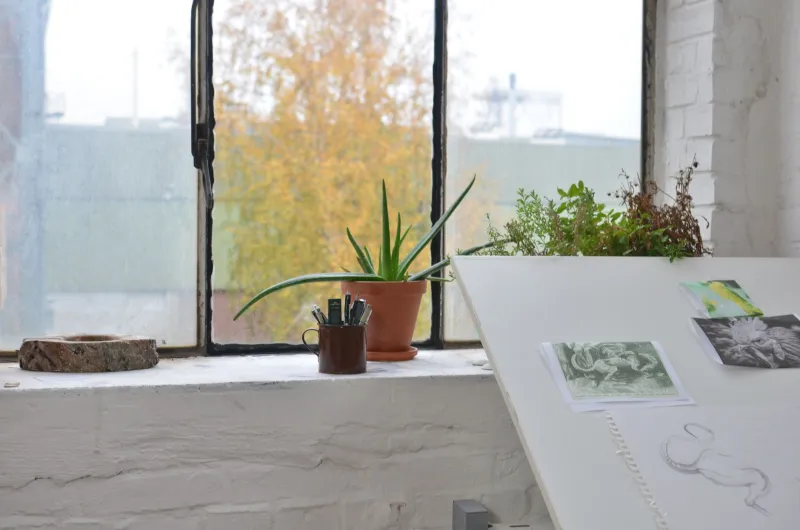
Deadlines are tidy. They have a date, a delivery, a thank-you email. The week after is not tidy. It is a pile of receipts, a blinking cursor, a sudden inability to remember what you actually like. In portfolio culture we tend to photograph the finished thing and skip the bit where the maker stares out of the window. But the fallow week is not a failure of momentum. It is the part of the process where the eye comes back.
At Isabel KM, we have started to treat the week after a big project as part of the project. Not a holiday, not a productivity hack, just a different phase. Here are the reset rituals UK illustrators and designers have shared — some sensible, some slightly feral — and why they matter.
1. Walk without a podcast
Not a content walk. No phone in hand, no voice note about the next big idea. Just a loop around the block, or a wet Tuesday walk to the park. One illustrator in Bristol walks the same route after every deadline: past the allotments, past the bus stop, past the shop that sells nothing but lightbulbs. The point is not novelty. The point is rhythm. Your visual memory is not a tap you can turn on. It refills by repetition and idle attention.
2. Make a bad drawing
Deliberately bad. A drawing that cannot be commissioned, posted or sold. Ugly proportions, wrong colours, no reference. A designer in Norwich keeps a cheap pad for this and calls it the compost heap. The bad drawing does two things: it gets your hand moving without the pressure of a brief, and it reminds you that making is not always a performance. Some of it will be rubbish. That is the job.
3. Tidy one shelf, not the studio
The temptation after a deadline is to either collapse or reorganise the entire studio. Both are too much. One shelf is enough. Clear the invoices, sharpen the pencils, throw out the dried-up markers. A small physical reset gives your brain a visible before-and-after. It also stops the admin mountain from becoming a personality trait.
4. Go to a gallery with no agenda
Not to get inspired. Not to research a project. Just to look at things at human speed. A small local museum is often better than a blockbuster show, because you can stand in front of one painting for ten minutes without being moved along by a crowd. One illustrator in Glasgow visits the same room every month and notices something different each time. That is not procrastination. That is maintenance.
5. Take the nap
Rest is not a reward for finishing. It is part of finishing. The week after a deadline is often when the exhaustion catches up, and pretending otherwise is how burnout gets invited back. A designer in Manchester blocks out the first afternoon after every delivery for a nap and a pot of tea. It sounds indulgent. It is actually risk management.
6. Start a new notebook you do not deserve
You know the one. The expensive one with the nice paper. The one you are saving for a better project. Use it now. A new notebook is a cheap way to make the fallow week feel like a beginning rather than a void. Write down nothing important. Draw a bad map of the walk. Copy a shop sign. The notebook does not have to become a sketchbook you show anyone. It just has to exist.
7. Do the visible admin
There is admin that sits in your head and admin that sits in a folder. The fallow week is a good time for the folder kind: invoices, backups, expenses, the tax thing you have been avoiding. Do the visible bit first. A tidy desktop is not a creative practice, but it clears a space where one can happen.
8. Notice one shop sign
This is the smallest ritual and maybe the most useful. On your next walk, find one piece of lettering you like. A hand-painted sign, a faded ghost sign, a sticker on a lamppost. Take a photograph or don't. The point is to break the habit of looking for reference and start looking for pleasure. Visual memory is fed by attention, not by scrolling.
The case for the fallow week
The strange gap after a deadline is not an empty space in the calendar. It is where you process the last project, notice what you want to do differently, and let your taste catch up with your output. In 2026, with feeds moving faster and briefs arriving with shorter turnarounds, the fallow week is easy to skip. It is also easy to defend. Put it in the diary. Tell a client you are unavailable. Do not fill it with a side project that is secretly another deadline.
The fallow week is part of the work. Not because rest is productive in a neat, capitalist way, but because making things requires a supply of attention. You cannot spend it all on delivery. At some point you have to go for a walk, make a bad drawing, and let the next idea arrive without a brief attached. The portfolio can wait. The eye needs a minute.